All Out War: The basics 1
For some of us the only glimpse of war we know is what is on TV. New conflicts every year it seems, we will never lack for violence in the world. But have you heard of the war that’s been going on for billions of years? Yup, on the scale of probably trillions of trillions of trillions of casualties. No end in sight it’ll probably go till the end of time. The war? Microbe versus microbe.
Now days we think of the war as man versus microbe and that is where I will take this and subsequent posts. I wager everyone know broadly what an antibiotic is. A molecule that kills life, “bio.” What makes this come to mind? Penicillin, amoxicillin, and doxycycline are probably three of the more recognized drugs. How do these work? Where did we find them? Do antibiotics only kill bacteria? Let’s see what we can answer here.
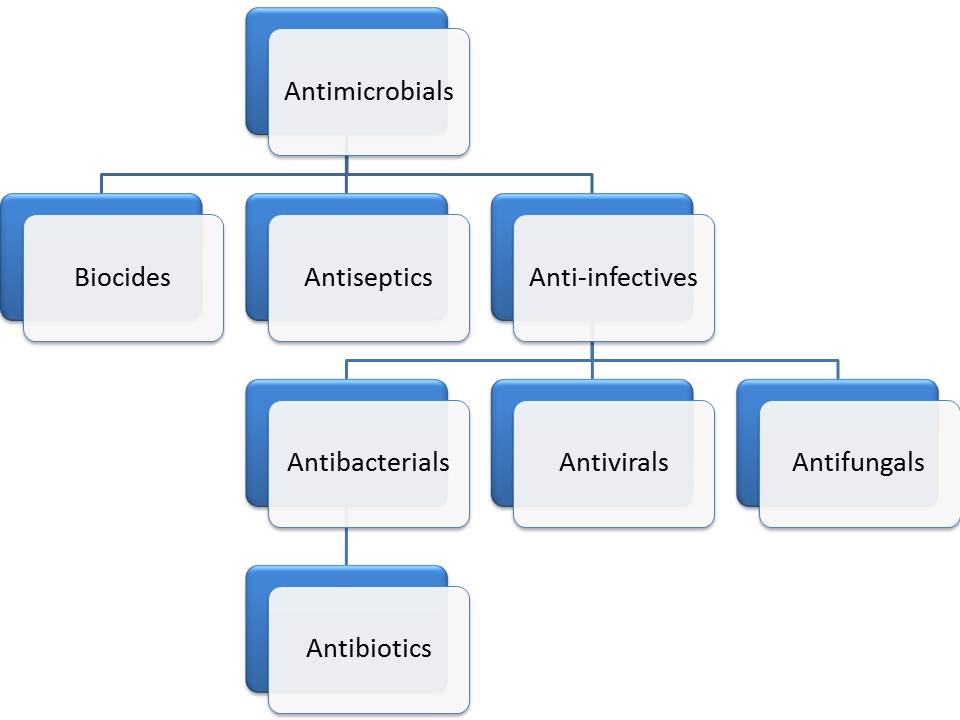
Antibiotics as mentioned above are aimed at bacteria (some also work on parasites) and can also be used against cancer but that is for another time. They fall under antimicrobials which fall under anti-infectives, I’ll put up a chart at the end I found super helpful. What else falls under anti-infectives? Biocides and antiseptics. Biocides are chemicals applied to material and antiseptics are those applied to skin primarily. But I want to talk about antibiotics and what I want matters most. At least to me it does.
Let's start with penicillin, the first antibiotic discovered in 1928 by Alexander Fleming. I always think about Nicolas Flamel from Harry Potter. Actually, I've never seen the two of them together in the same room. Coincidence? Ok now to the fun stuff, penicillin is one of the most widely used antibiotics in the world. It covers gram-positive cocci and rods, some anaerobes, and gram-negative cocci, with later generations working on gram-negative rods as well.
Penicillin stops the growth of the bacterial cell wall, with a beta-lactam ring which binds to a critical part of the wall, causing weakness. Which causes the cell to implode. Beta-lactamase is a enzyme secreted by some bacteria which neutralizes the penicillin's mechanism of action. In come beta-lactamase inhibitors to run defense for the penicillin. A commonly heard of example is amoxicillin/clavulanic acid or Augmentin. Just wait until you hear about beta-lactamase inhibitor inhibitors, and beta-lactamase inhibitor inhibitors inhibitor, its inhibitor inception..... Just kidding.
But seriously, resistance to penicillin is growing. Just like every other antibiotic so no surprise there. The mechanism listed above is called enzymatic degradation but others are around as well. A removal of entry points into the cell and development of penicillin resistant penicillin binding proteins.
Penicillins have generally poor ability to enter into CSF, getting marginally better with each passing generation. They are cleared by the kidneys primarily. Some side effects include nausea, vomiting, diarrhea, rash, CDAD, neutropenia with long term use, and electrolyte imbalances due to the excretion via kidney. One of the key takeaways I found was to confirm the infection is susceptible to penicillin, given the rising rates of resistance.
I am not going to pretend to know enough yet, nursing school did not cover nearly enough to sate my interest. Know any good penicillin facts, pearls, or resources on it? Please share and fill me in on what you know.
References
Image from Antimicrobials, anti-infect ices, or antibiotics? at Reflections on Infection Prevention and Control by Jon Otter July 18, 2016.
Penicillin in StatPearls by Yip and Gerriets at the NIH National Library of Medicine updated 2022.
Penicillins by Preston and Drusano at Antimicrobe.org.
Comments
Post a Comment